Guides
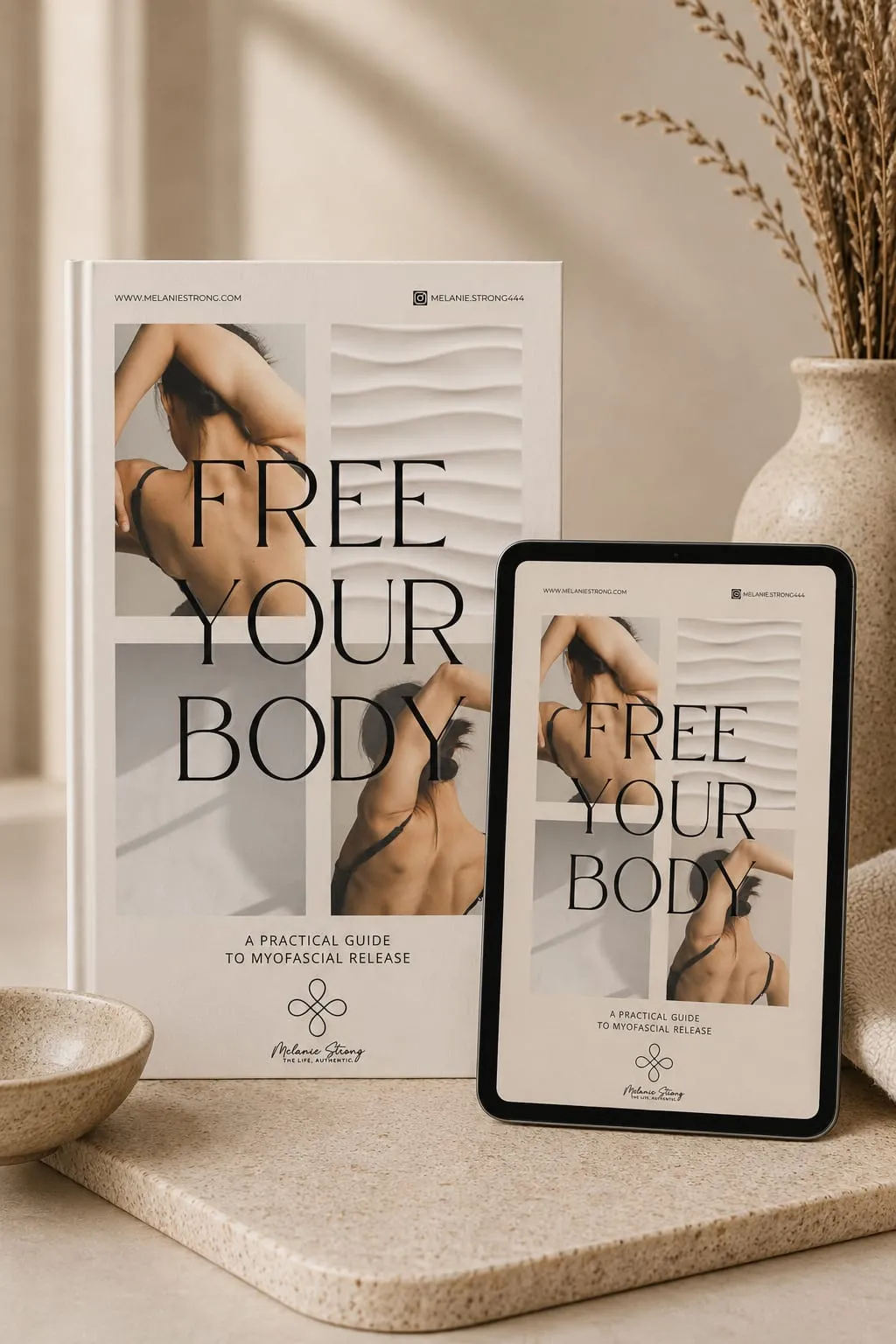
Free Your Body: A Practical Guide to Myofascial Release
Feel better in the body you already have.
Most people live with chronic tension they've simply learned to ignore — the stiff neck that never quite goes away, the hips that ache after sitting, the back that tightens under stress. We stretch, we exercise, we rest, and still something feels held. The missing piece, for many, is fascia.
Free Your Body is a plain-language guide to one of the most overlooked systems in the human body — the fascial network, a continuous web of collagen and elastin that wraps every muscle, bone, and organ from head to toe. When fascia tightens, it doesn't just create local discomfort. It pulls. It restricts. It refers pain to places far from its source. And unlike muscle, it doesn't respond to hurried stretching. It requires something most of us have forgotten how to give our bodies: time, patience, and sustained, intelligent pressure.
Drawing on decades of myofascial research from John F. Barnes' clinical MFR protocols to Robert Schleip's connective tissue biomechanics and Helene Langevin's fascial remodeling studies, this guide translates the science into techniques anyone can follow. No equipment required beyond a foam roller, a tennis ball, and the weight of your own body.
Organized from head to toe, the guide walks you through:
The upper body — releasing the suboccipital fascia at the base of the skull, the jaw and cervical layers that accumulate years of stress, the shoulder and chest restrictions that pull us forward into screens and desks
The torso — freeing the diaphragm (the most chronically restricted structure in modern adults), the thoracolumbar fascia along the spine, and the deep psoas — the muscle that connects your spine to your legs and holds more emotional tension than almost any other tissue in the body
The lower body — addressing the IT band, hip flexors, hamstrings, calves, and plantar fascia with techniques grounded in the research on sustained low-load stretching
A full-body reset sequence — a 10-minute daily practice that integrates the entire fascial system from the soles of your feet to the top of your skull
Woven throughout is one core truth the research keeps returning to: fascia is not just structural, it is sensory. It is alive with nerve endings. It communicates. And when you learn to listen to it, and respond with the right kind of slow, steady attention, the body has a remarkable capacity to unwind itself.
Free Your Body is not a book about pain management. It is a book about rediscovering ease — and understanding why your body holds tension in the first place, so you can finally, genuinely, let it go.
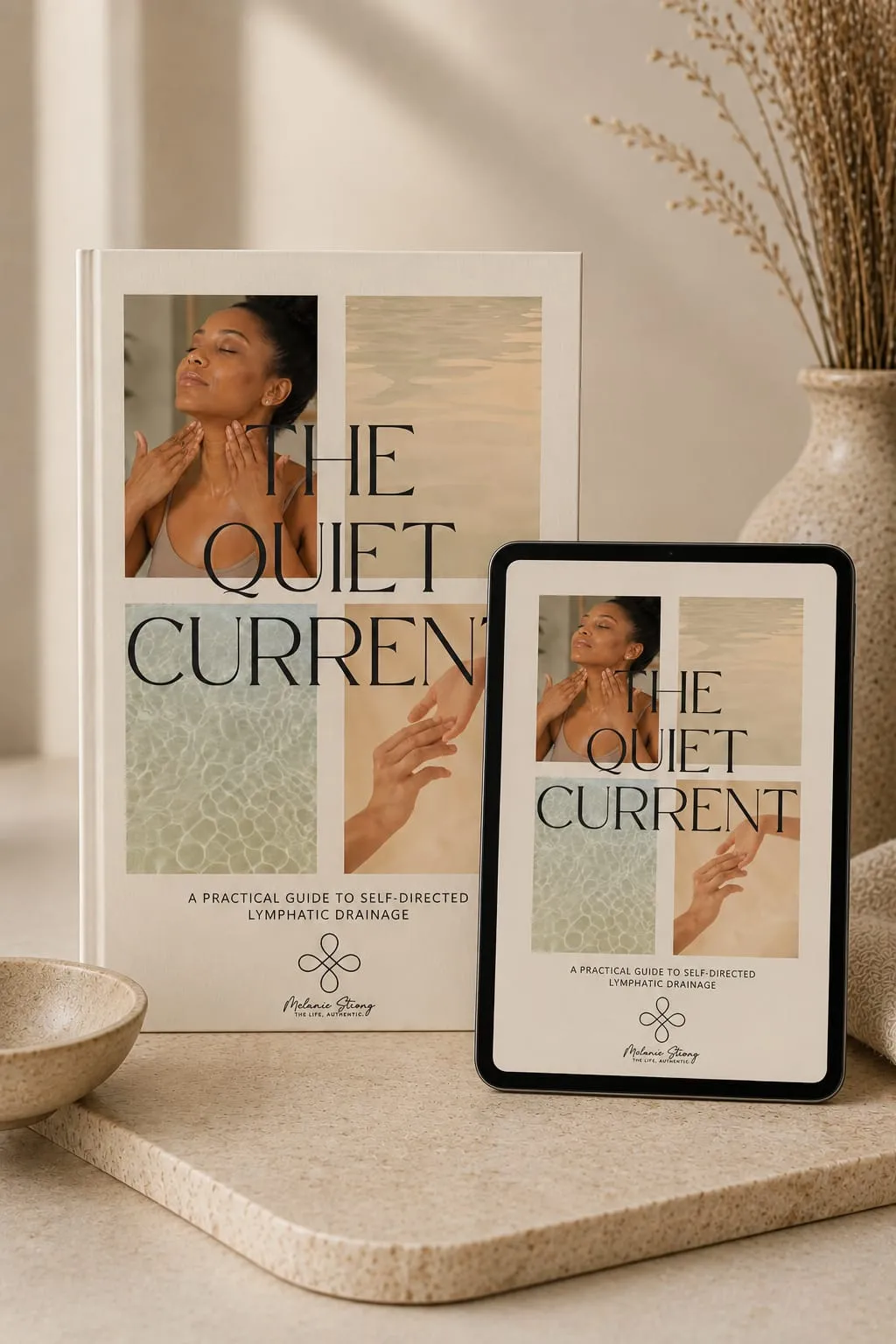
The Quiet Current
The Quiet Current is a practical, evidence-based guide to one of the most powerful forms of self-care available — manual lymphatic drainage, or MLD. Developed by Danish physician Emil Vodder in the 1930s and validated in dozens of clinical trials over the decades that followed, MLD uses feather-light, precisely directed strokes to stimulate the contractions of lymph vessels and move fluid toward the body's drainage points. The result is a system that flows more freely, a body that feels less congested and heavy, and an immune function that operates the way it was designed to.
What makes this guide different from the clinical protocols used by certified lymphedema therapists is its accessibility. You do not need a treatment table or a trained practitioner. You need your hands, a basic understanding of how the system works, and the willingness to move slowly, because slow is the only speed at which lymphatic work is effective. The lymph vessels are gossamer-thin. They sit just beneath the skin. Firm pressure collapses them entirely and defeats the purpose. What they respond to is the gentlest possible sustained stretch of the skin's surface, repeated rhythmically, always moving in the direction the fluid needs to travel.
This guide will teach you exactly how to do that, from the top of your head to the soles of your feet.
Drawing on the foundational research of Vodder, the clinical refinements of Michael and Ethel Földi, and the ongoing science emerging from the Lymphatic Education and Research Network, The Quiet Current translates decades of clinical knowledge into plain, unhurried language. Every technique is grounded in the anatomy of where your lymph nodes actually sit, how your lymph vessels actually flow, and why direction, pressure, and sequence are not optional details but the entire mechanism.
Woven throughout is a principle that the lymphatic research returns to again and again: this system is designed to work in partnership with movement, breath, and gravity. It is not passive. It is responsive. And when you learn to work with it, gently, patiently, in the right direction, the body rewards that attention with a quality of lightness and ease that is difficult to describe until you have experienced it for yourself.
The Quiet Current is not a book about illness, though it has much to offer those managing lymphedema, chronic inflammation, or immune challenges. It is a book about maintenance; about caring for a system that works tirelessly on your behalf every hour of every day, and that flourishes when given even a small portion of the attention it deserves.
Your lymphatic system has been flowing your entire life without a single request for acknowledgment.
This guide is your answer.
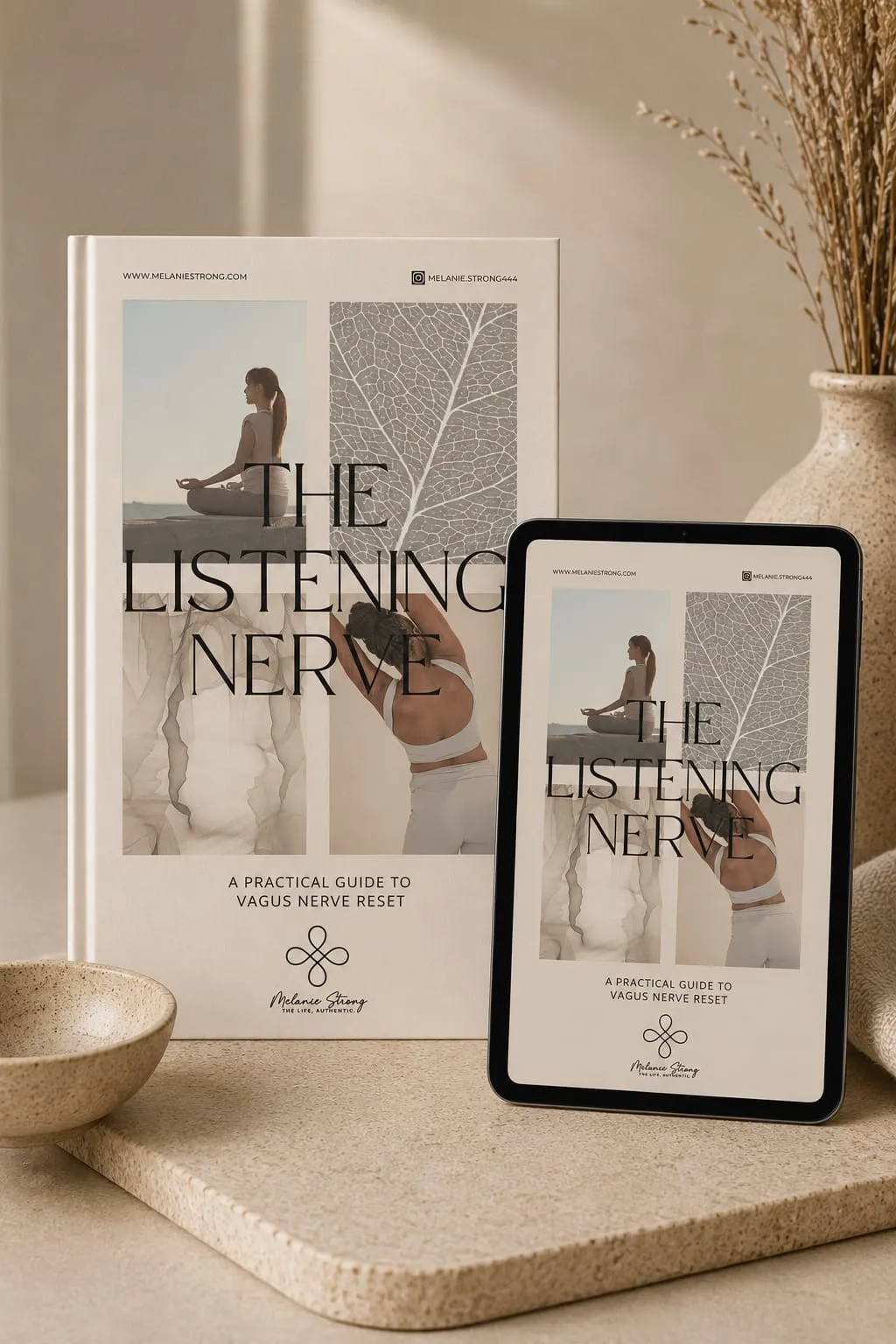
The Listening Nerve: A Practical Guide to Vagus Nerve Reset
Reset your nervous system. Reclaim your calm.
The Listening Nerve is a practical, evidence-based guide to vagal toning — the process of deliberately strengthening the vagus nerve's capacity to move you out of stress activation and into genuine physiological rest. It is written for anyone who has ever felt stuck in a state of low-grade tension they cannot seem to think their way out of. Anyone who lies down to rest but cannot relax. Anyone whose nervous system seems to have forgotten what calm actually feels like in the body — not as an idea, but as a physical reality.
Drawing on the foundational work of Stephen Porges' polyvagal research, the HRV science of Laborde, the breathwork findings of Balban and Bernardi, and the clinical evidence for auricular vagal stimulation, The Listening Nerve walks you through three interconnected domains of vagal practice:
Woven throughout is a distinction that changes everything once you understand it: the difference between sympathetic activation — the fight-or-flight response that mobilizes the body against threat — and parasympathetic dominance — the ventral vagal state in which the body can digest, repair, connect, create, and heal. Most people in contemporary life spend far more time in the former than the latter. Not because their lives are genuinely dangerous, but because the nervous system has never been taught how to return.
This guide is that return path.
The Listening Nerve is not a book about anxiety, though it has much to offer those who live with it. It is not a book about trauma, though the vagal research has deep implications for how the body stores and releases it. It is a book about something more fundamental: the basic human capacity for physiological rest, and what becomes possible — in health, in relationships, in creativity, in the simple experience of being alive — when that capacity is restored.
The vagus nerve has been listening to your body your entire life.
This guide teaches you how to listen back.
Guides
Free Your Body: A Practical Guide to Myofascial Release
Feel better in the body you already have.
Most people live with chronic tension they've simply learned to ignore — the stiff neck that never quite goes away, the hips that ache after sitting, the back that tightens under stress. We stretch, we exercise, we rest, and still something feels held. The missing piece, for many, is fascia.
Free Your Body is a plain-language guide to one of the most overlooked systems in the human body — the fascial network, a continuous web of collagen and elastin that wraps every muscle, bone, and organ from head to toe. When fascia tightens, it doesn't just create local discomfort. It pulls. It restricts. It refers pain to places far from its source. And unlike muscle, it doesn't respond to hurried stretching. It requires something most of us have forgotten how to give our bodies: time, patience, and sustained, intelligent pressure.
Drawing on decades of myofascial research from John F. Barnes' clinical MFR protocols to Robert Schleip's connective tissue biomechanics and Helene Langevin's fascial remodeling studies, this guide translates the science into techniques anyone can follow. No equipment required beyond a foam roller, a tennis ball, and the weight of your own body.
Organized from head to toe, the guide walks you through:
The upper body — releasing the suboccipital fascia at the base of the skull, the jaw and cervical layers that accumulate years of stress, the shoulder and chest restrictions that pull us forward into screens and desks
The torso — freeing the diaphragm (the most chronically restricted structure in modern adults), the thoracolumbar fascia along the spine, and the deep psoas — the muscle that connects your spine to your legs and holds more emotional tension than almost any other tissue in the body
The lower body — addressing the IT band, hip flexors, hamstrings, calves, and plantar fascia with techniques grounded in the research on sustained low-load stretching
A full-body reset sequence — a 10-minute daily practice that integrates the entire fascial system from the soles of your feet to the top of your skull
Woven throughout is one core truth the research keeps returning to: fascia is not just structural, it is sensory. It is alive with nerve endings. It communicates. And when you learn to listen to it, and respond with the right kind of slow, steady attention, the body has a remarkable capacity to unwind itself.
Free Your Body is not a book about pain management. It is a book about rediscovering ease — and understanding why your body holds tension in the first place, so you can finally, genuinely, let it go.
The Quiet Current
The Quiet Current is a practical, evidence-based guide to one of the most powerful forms of self-care available — manual lymphatic drainage, or MLD. Developed by Danish physician Emil Vodder in the 1930s and validated in dozens of clinical trials over the decades that followed, MLD uses feather-light, precisely directed strokes to stimulate the contractions of lymph vessels and move fluid toward the body's drainage points. The result is a system that flows more freely, a body that feels less congested and heavy, and an immune function that operates the way it was designed to.
What makes this guide different from the clinical protocols used by certified lymphedema therapists is its accessibility. You do not need a treatment table or a trained practitioner. You need your hands, a basic understanding of how the system works, and the willingness to move slowly, because slow is the only speed at which lymphatic work is effective. The lymph vessels are gossamer-thin. They sit just beneath the skin. Firm pressure collapses them entirely and defeats the purpose. What they respond to is the gentlest possible sustained stretch of the skin's surface, repeated rhythmically, always moving in the direction the fluid needs to travel.
This guide will teach you exactly how to do that, from the top of your head to the soles of your feet.
Drawing on the foundational research of Vodder, the clinical refinements of Michael and Ethel Földi, and the ongoing science emerging from the Lymphatic Education and Research Network, The Quiet Current translates decades of clinical knowledge into plain, unhurried language. Every technique is grounded in the anatomy of where your lymph nodes actually sit, how your lymph vessels actually flow, and why direction, pressure, and sequence are not optional details but the entire mechanism.
Woven throughout is a principle that the lymphatic research returns to again and again: this system is designed to work in partnership with movement, breath, and gravity. It is not passive. It is responsive. And when you learn to work with it, gently, patiently, in the right direction, the body rewards that attention with a quality of lightness and ease that is difficult to describe until you have experienced it for yourself.
The Quiet Current is not a book about illness, though it has much to offer those managing lymphedema, chronic inflammation, or immune challenges. It is a book about maintenance; about caring for a system that works tirelessly on your behalf every hour of every day, and that flourishes when given even a small portion of the attention it deserves.
Your lymphatic system has been flowing your entire life without a single request for acknowledgment.
This guide is your answer.
The Listening Nerve: A Practical Guide to Vagus Nerve Reset
Reset your nervous system. Reclaim your calm.
The Listening Nerve is a practical, evidence-based guide to vagal toning — the process of deliberately strengthening the vagus nerve's capacity to move you out of stress activation and into genuine physiological rest. It is written for anyone who has ever felt stuck in a state of low-grade tension they cannot seem to think their way out of. Anyone who lies down to rest but cannot relax. Anyone whose nervous system seems to have forgotten what calm actually feels like in the body — not as an idea, but as a physical reality.
Drawing on the foundational work of Stephen Porges' polyvagal research, the HRV science of Laborde, the breathwork findings of Balban and Bernardi, and the clinical evidence for auricular vagal stimulation, The Listening Nerve walks you through three interconnected domains of vagal practice:
Woven throughout is a distinction that changes everything once you understand it: the difference between sympathetic activation — the fight-or-flight response that mobilizes the body against threat — and parasympathetic dominance — the ventral vagal state in which the body can digest, repair, connect, create, and heal. Most people in contemporary life spend far more time in the former than the latter. Not because their lives are genuinely dangerous, but because the nervous system has never been taught how to return.
This guide is that return path.
The Listening Nerve is not a book about anxiety, though it has much to offer those who live with it. It is not a book about trauma, though the vagal research has deep implications for how the body stores and releases it. It is a book about something more fundamental: the basic human capacity for physiological rest, and what becomes possible — in health, in relationships, in creativity, in the simple experience of being alive — when that capacity is restored.
The vagus nerve has been listening to your body your entire life.
This guide teaches you how to listen back.
The Complete Body Reset Collection
Three evidence-based guides. One intelligent sequence. A whole-body approach to releasing, flowing, and resetting.
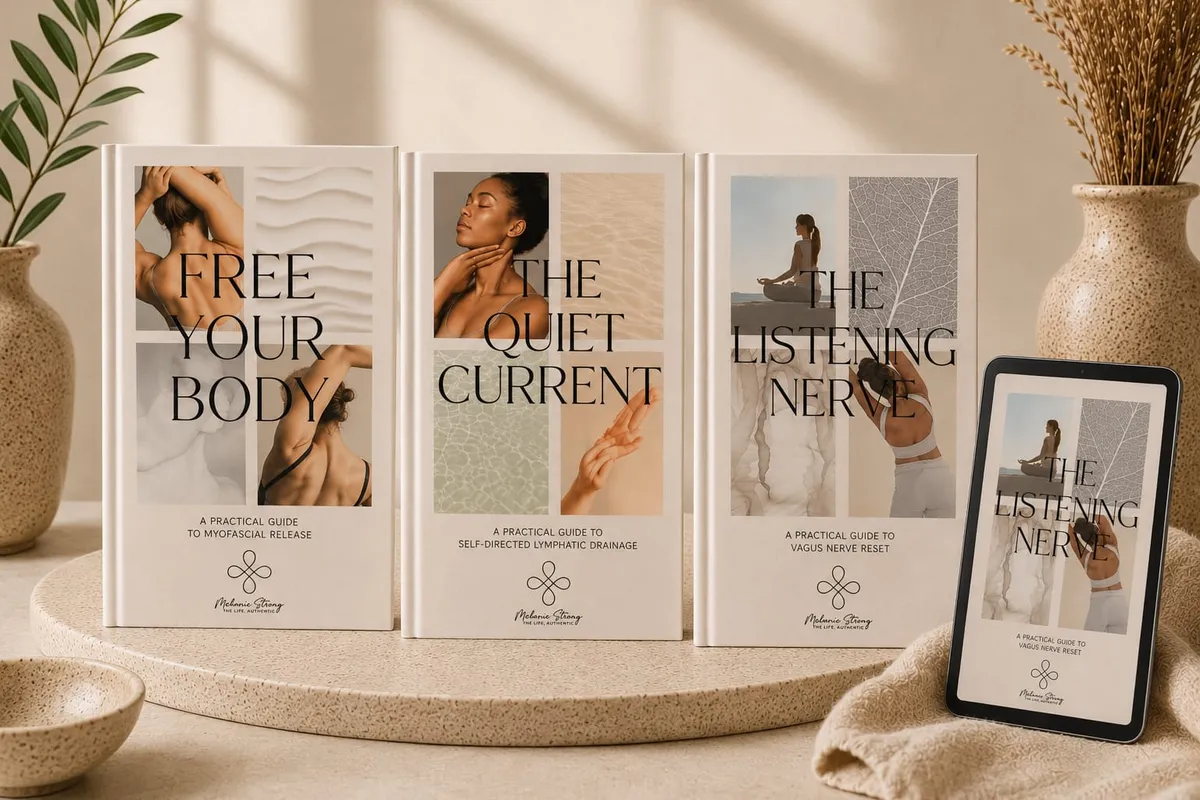
Most wellness practices treat the body as a collection of separate problems. Tight muscles here. Sluggish energy there. Chronic stress somewhere else entirely. The Complete Body Reset Collection takes a different approach — one grounded in physiology, guided by research, and built around a sequence that mirrors the way the body actually heals.
These three guides were designed to be used together, in order, because the order matters.
First, you release. Before anything else can flow freely, the physical restrictions holding the body in place must be addressed. Fascia — the connective web woven through every muscle, joint, and organ — tightens under stress, injury, and the accumulated postures of daily life. When it does, it compresses blood vessels, lymph channels, and nerves. It creates the kind of deep, diffuse tension that stretching alone cannot reach. Free Your Body: A Practical Guide to Myofascial Release uses slow, sustained, evidence-based pressure techniques to soften and release these restrictions from head to toe — opening the physical pathways that everything downstream depends on.
Then, you flush. Once the fascial tissue has been released and the body's channels are open, the lymphatic system can do what it was designed to do: collect and carry away the metabolic waste, inflammatory byproducts, and excess fluid that accumulate in the tissues. The Quiet Current: A Practical Guide to Self-Directed Lymphatic Drainage teaches you the gentle, precisely directed techniques of manual lymphatic drainage — validated in clinical trials, organized from head to toe, and sequenced in the exact order the anatomy requires. The result is a body that feels lighter, less congested, and more alive — because the system responsible for its internal housekeeping is finally running freely.
Finally, you reset. With the body's physical tissue released and its fluid pathways cleared, the nervous system is ready to receive the most important signal of all: safety. The Listening Nerve: A Practical Guide to Vagus Nerve Reset draws on the robust and growing science of heart rate variability to give you a complete toolkit for vagal toning — activating the parasympathetic nervous system through breath, voice, cold, movement, and connection. When the vagus nerve is well-toned, the body can digest, repair, regulate emotion, and rest with an efficiency that no amount of willpower or positive thinking can manufacture. It has to be built, physiologically, from the ground up.
Together, these three guides form a complete protocol for whole-body restoration — one that begins in the tissue, moves through the fluid, and settles in the nervous system. Each guide stands alone as a thorough and practical resource. Used in sequence, they become something greater: a framework for understanding your body as the interconnected, intelligent, self-healing system it has always been — and for giving it, finally, exactly what it needs.
Journals
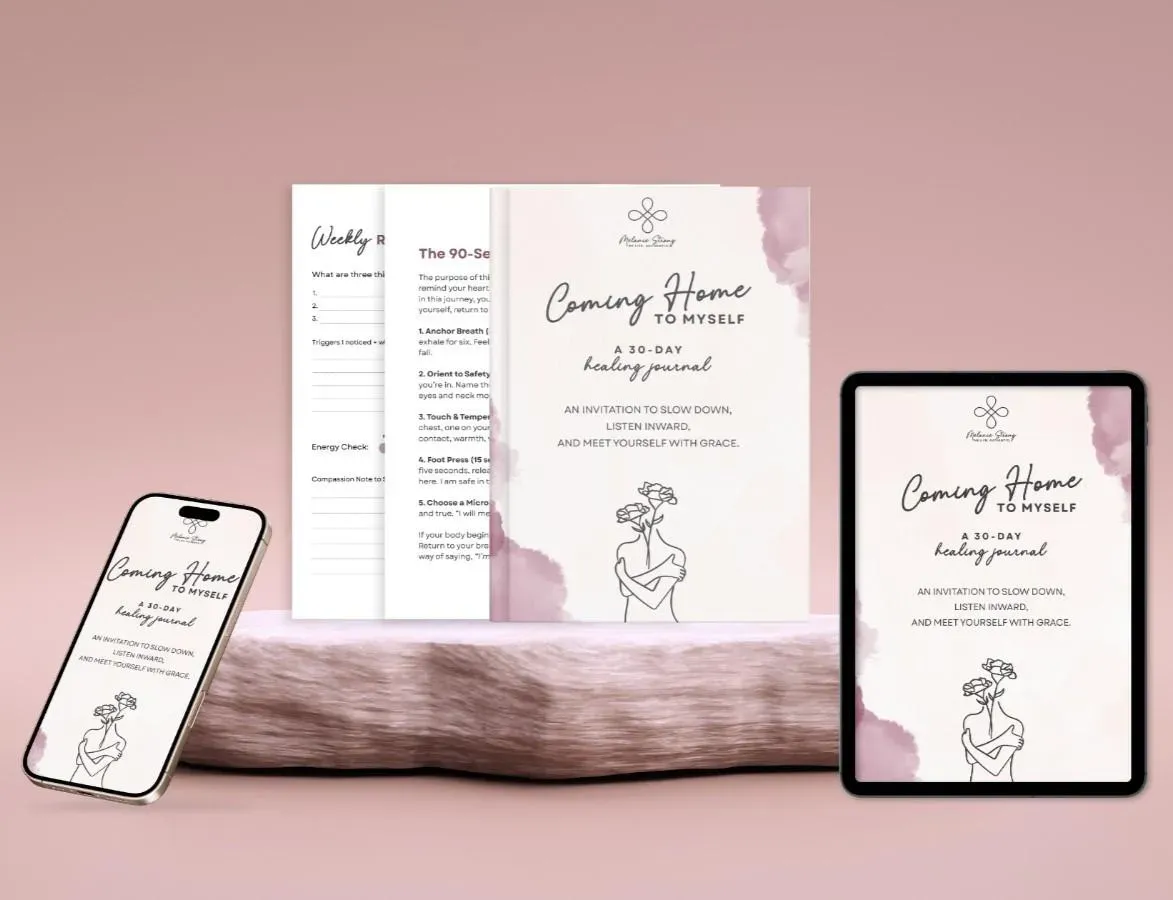
Coming Home to Myself
Created for moments of overwhelm, disconnection, and emotional noise, this journal helps you slow down, reflect honestly, and reconnect with what is true.
Books
The Wise and Wonderful Waterfall

The Wise and Wonderful Waterfall is a beautifully symbolic story about transformation, healing, and the generations changed when one person chooses awareness over destruction.
The journey begins with a volcano — explosive, fiery, and consumed by rage. In its eruption, it tears through the earth, carving deep wounds into the landscape around it. But over time, something remarkable begins to happen. The destruction slowly transforms. Water begins to flow through the very path the volcano created, and what was once harsh and chaotic becomes lush, vibrant, and alive. The volcano’s fury softens into the steady, welcoming calm of a wise and wonderful waterfall.
Written as a children’s story but carrying profound meaning for adults, the book gently mirrors the human healing journey: from explosive anger, emotional pain, and reactive patterns… toward intentional awareness, emotional regulation, compassion, and peace. Through poetic storytelling and rich natural imagery, readers are invited to see that even our deepest wounds can become pathways to growth, wisdom, and connection.
At its heart, The Wise and Wonderful Waterfall is about breaking cycles. It explores how unresolved pain can ripple through generations — but so can healing. As the story unfolds, the waterfall becomes a symbol of the grounded, regulated adult: one who has learned to channel emotion with wisdom rather than destruction, and who creates safety, nourishment, and peace for the children who come after them.
This is more than a children’s book. It is a story for families, healers, parents, educators, and anyone learning that transformation does not erase the past — it reshapes it into something beautiful.
When Butterflies Fly (coming soon)
Description

Eight Dates Straight (coming soon)
Description
Quizzes
Take A Quiz on Your
Healing Journey
The Complete Body Reset Collection
Three evidence-based guides. One intelligent sequence. A whole-body approach to releasing, flowing, and resetting.
Most wellness practices treat the body as a collection of separate problems. Tight muscles here. Sluggish energy there. Chronic stress somewhere else entirely. The Complete Body Reset Collection takes a different approach — one grounded in physiology, guided by research, and built around a sequence that mirrors the way the body actually heals.
These three guides were designed to be used together, in order, because the order matters.
First, you release. Before anything else can flow freely, the physical restrictions holding the body in place must be addressed. Fascia — the connective web woven through every muscle, joint, and organ — tightens under stress, injury, and the accumulated postures of daily life. When it does, it compresses blood vessels, lymph channels, and nerves. It creates the kind of deep, diffuse tension that stretching alone cannot reach. Free Your Body: A Practical Guide to Myofascial Release uses slow, sustained, evidence-based pressure techniques to soften and release these restrictions from head to toe — opening the physical pathways that everything downstream depends on.
Then, you flush. Once the fascial tissue has been released and the body's channels are open, the lymphatic system can do what it was designed to do: collect and carry away the metabolic waste, inflammatory byproducts, and excess fluid that accumulate in the tissues. The Quiet Current: A Practical Guide to Self-Directed Lymphatic Drainage teaches you the gentle, precisely directed techniques of manual lymphatic drainage — validated in clinical trials, organized from head to toe, and sequenced in the exact order the anatomy requires. The result is a body that feels lighter, less congested, and more alive — because the system responsible for its internal housekeeping is finally running freely.
Finally, you reset. With the body's physical tissue released and its fluid pathways cleared, the nervous system is ready to receive the most important signal of all: safety. The Listening Nerve: A Practical Guide to Vagus Nerve Reset draws on the robust and growing science of heart rate variability to give you a complete toolkit for vagal toning — activating the parasympathetic nervous system through breath, voice, cold, movement, and connection. When the vagus nerve is well-toned, the body can digest, repair, regulate emotion, and rest with an efficiency that no amount of willpower or positive thinking can manufacture. It has to be built, physiologically, from the ground up.
Together, these three guides form a complete protocol for whole-body restoration — one that begins in the tissue, moves through the fluid, and settles in the nervous system. Each guide stands alone as a thorough and practical resource. Used in sequence, they become something greater: a framework for understanding your body as the interconnected, intelligent, self-healing system it has always been — and for giving it, finally, exactly what it needs.
Journals
Coming Home to Myself
Created for moments of overwhelm, disconnection, and emotional noise, this journal helps you slow down, reflect honestly, and reconnect with what is true.
Books
The Wise and Wonderful Waterfall
The Wise and Wonderful Waterfall is a beautifully symbolic story about transformation, healing, and the generations changed when one person chooses awareness over destruction.
The journey begins with a volcano — explosive, fiery, and consumed by rage. In its eruption, it tears through the earth, carving deep wounds into the landscape around it. But over time, something remarkable begins to happen. The destruction slowly transforms. Water begins to flow through the very path the volcano created, and what was once harsh and chaotic becomes lush, vibrant, and alive. The volcano’s fury softens into the steady, welcoming calm of a wise and wonderful waterfall.
Written as a children’s story but carrying profound meaning for adults, the book gently mirrors the human healing journey: from explosive anger, emotional pain, and reactive patterns… toward intentional awareness, emotional regulation, compassion, and peace. Through poetic storytelling and rich natural imagery, readers are invited to see that even our deepest wounds can become pathways to growth, wisdom, and connection.
At its heart, The Wise and Wonderful Waterfall is about breaking cycles. It explores how unresolved pain can ripple through generations — but so can healing. As the story unfolds, the waterfall becomes a symbol of the grounded, regulated adult: one who has learned to channel emotion with wisdom rather than destruction, and who creates safety, nourishment, and peace for the children who come after them.
This is more than a children’s book. It is a story for families, healers, parents, educators, and anyone learning that transformation does not erase the past — it reshapes it into something beautiful.
When Butterflies Fly (coming soon)
Description
Eight Dates Straight (coming soon)
Description
Quizzes
Take A Quiz On Your
Healing Journey
© 2026 · www.MelanieStrong.com · All Rights Reserved